Posts

Three in One? The Issues

Image
The Sunday following Pentecost is traditionally devoted to a celebration of the Trinity – that theological reflection on the nature of God that seeks to understand the relationship between that Being that serves as the Ground and Source of all existence (the “Father”), that Being who was experienced by human persons as being the human embodiment of the Divine or who had a co-existence with the Father” in some way, and that Being enigmatically referred to as the Holy Spirit, the Advocate, or the Comforter. These questions have puzzled and exercised the theological imaginations of Christians for centuries. This Blogspot will certainly not fully untangle any of the knots involved.  I’m not even sure I will even be able to provide a sufficient survey of the issues involved, but will instead offer some of the reflections that I have found helpful. The basic formulation of the Trinity arose out of the efforts of the early Christian communities to understand the true nature of Jesus, so...

Pentecost and a Gift of 70

Image
I continue today with my discussion of the background to and development of the Feast of Pentecost.   As indicated in my last post, the earliest stratum of the celebration is as a harvest festival. The Jewish Encyclopedia indicates that following the Exile in Babylon (597 – 538 BCE ), Shavuot (or Pentecost) came to include a celebration of the giving of the Torah to the Jewish people, especially the giving of the Law to Moses on Sinai. Of interest is the idea or tradition that the law was given in 70 languages, presumably to correspond with what is referred to in the Book of Jubilees as the “Seventy Gentile Nations” ( Jubilees 44:34 ). The Jewish Encyclopedia says this about this tradition: T he haggadic assumption that there are seventy nations and languages in the world is based upon the ethnological table given in Gen. x., where seventy grandsons of Noah are enumerated, each of whom became the ancestor of a nation. The earlier Christian writers also took this table as det...

PenteWhat?

Image
This next Sunday we will be celebrating the festival of Pentecost. Pentecost is a very special Sunday in the Church year because it celebrates the bestowal of the Holy Spirit upon the Church. The basic story is found in Acts 2:1-21 . However, the feast of Pentecost was not invented by the early Christian community. It was, in fact, an already existing feast celebrated by the Jewish people. “Pentecost” is the Greek name for the Feast of Weeks, Shavuot in Hebrew. The Jewish Encyclopedia has an in-depth article on their website which discusses the various developments of the festival in the Jewish tradition.   Pentecost is a wonderful example of a festival that probably began as a harvest celebration and attracted additional meanings and observances to it. In the Bible, the Hebrew Scriptures refer to it in several places:   Exodus 23:14-17  says this: "Three times in the year you shall hold a festival for me. You shall observe the festival of unleavened bread; as ...

A Mother for a Whole Community

Image
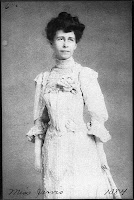
Today I would like to look at the story of the origins of the celebration of Mother’s Day in the United States in the context of the life of the woman who succeeded in getting it designated as a national observance. But the origins of this observance had nothing to do with sending flowers and enriching the floral industry or sentimental cards and enriching the greeting card industry. It had to do with recognizing and honoring the tireless work of women in trying to improve conditions for people in their local communities and families. [Anna Jarvis, daughter of Ann Marie Reeves Jarvis] The Civil War provided the impetus behind the work of Ann Marie Reeves Jarvis, the mother of Anna Jarvis, who is credited with working to establish Mother’s Day as a National Commemoration of the work of mothers for the betterment of their communities and families. Ann, her husband Granville, and their children lived in Grafton, Taylore County, West Virgina. Ann was the daughter of a Methodist minist...

Julia Ward Howe: A Mothers Crusade against War

Image
This week we pause from our regular schedule of sermons to reflect upon one of the venerable holidays in our country whose origins might surprise and amaze you. Hopefully it will also inspire you. Mother’s Day did not originate in the minds of card makers or floral designers or even chocolatiers. It originated in midst of blood, pain, horror, devastation and trauma. It came as a result of the Civil War that ripped apart families, disrupted communities, and scarred the soul of an entire nation. The story of Mother’s day originates in the overlapping but not intersecting work of two women: Julia Ward Howe and Anna Jarvis. Today I will look at the work of Julia Ward Howe. Tomorrow I will look at the work of Anna Jarvis. Julia Ward Howe was born in 1819 in New York City. She was associated with her husband, Samuel Gridley Howe, in his humanitarian work and in editing and contributing to the Boston Commonwealth, an antislavery paper. Inspired by a visit to a Union army camp during the Ame...

Make a New Plan, Stan

Image
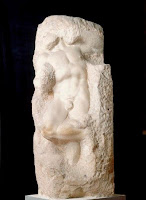
British sculptor Sir Jacob Epstein was once visited in his studio by the eminent author and fellow Briton, George Bernard Shaw. The visitor noticed a huge block of stone standing in one corner and asked what it was for. "I don't know yet. I'm still making plans." Shaw was astounded. "You mean you plan your work. Why, I change my mind several times a day!" "That's all very well with a four-ounce manuscript," replied the sculptor, "but not with a four-ton block." ( Today in the Word , April 5, 1993.) This story gives a good illustration of the difference between the way we make plans as individuals and the way we make plans as a church – which is a large body of individuals. Ask anyone in the military: the amount of logistical planning that is necessary for the deployment of troops is amazing. As a single person on the move, you can change directions instantaneously and spot decisions are possible. Not so with a large contingent of ...

Pronouncing Our Purpose: Pomposity or Precision?

Image
Have you ever gone down to one of your favorite stores only to find a “Going out of business” sign posted? It’s a great time to get a bargain, but what happens after that? Someone once encountered the following sign across the window of one establishment that was closing its doors: “Going out of business. Forgot what our business was.” As tragic as that may sound, it was certainly an honest self-appraisal. What about us as a church? What is our business? Where are we going? What is our purpose for being here in Pocatello?   A church without a purpose is a little like Alice in the fairy tale Alice in Wonderland . In a conversation with the Cheshire Cat, Alice asked, "Would you tell me please, which way I ought to go from here?" "That depends a good deal on where you want to get to," said the cat. "I don't much care where," said Alice. "Then it doesn't matter which way you go," said the cat. It is vitally important to know where we ...